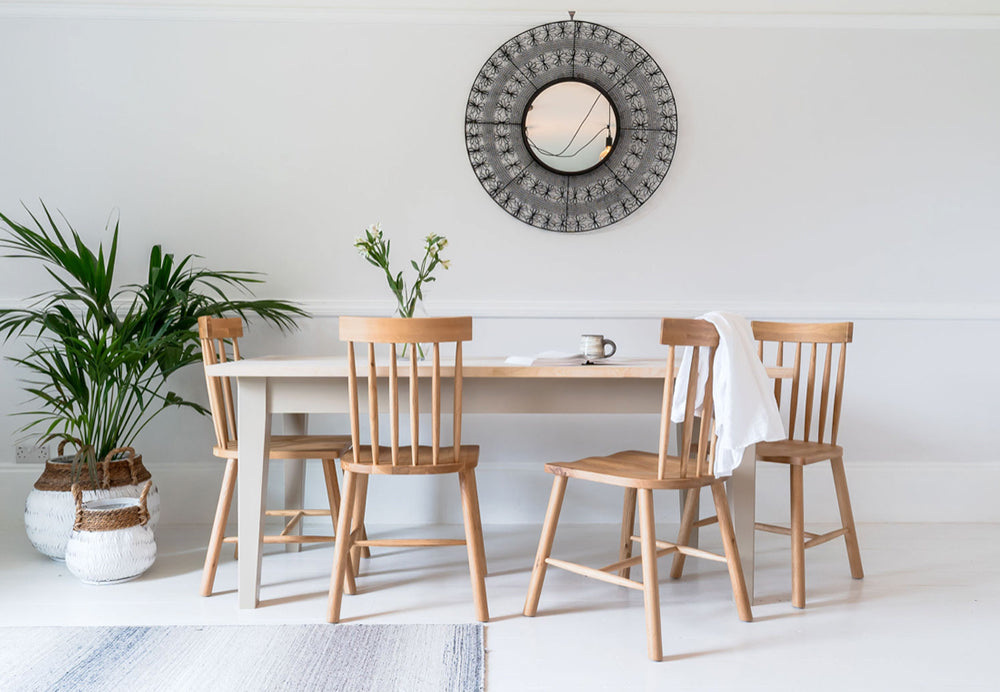
Fully Bespoke Tables
Customers come to us with very different starting points. Some already have a design in mind and want to refine the size or details — that's what our Bespoke service is for. Others want to start with a blank sheet of paper. Many sit somewhere in between, and we're comfortable working across that whole spectrum.
Fully Bespoke means projects that go beyond straightforward choices and into genuinely bespoke territory — where the design and construction are shaped around your space and how you plan to use the table.
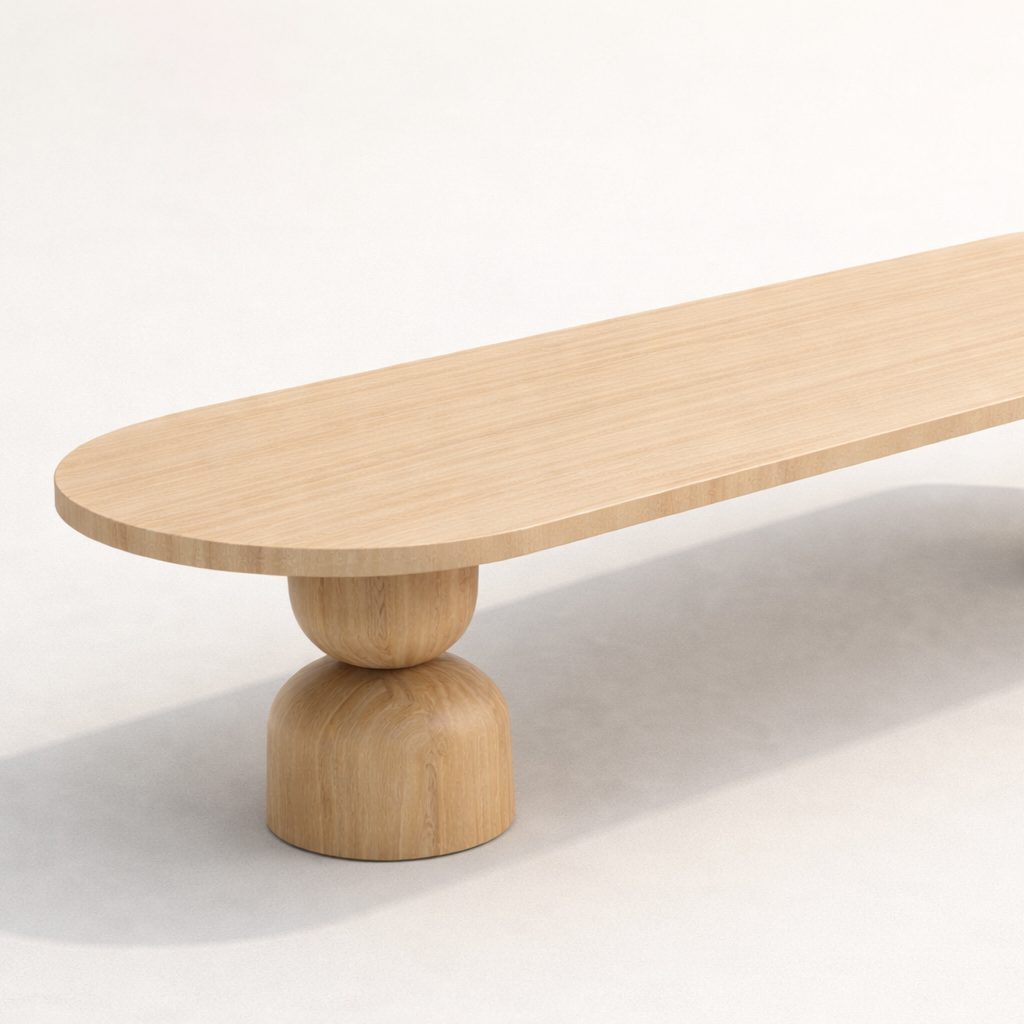
From Idea to Reality
Fully Bespoke might involve adapting an existing design, or it might mean developing something entirely new. We can work from your own drawings or reference images, or develop ideas together through sketches and drawings until the direction feels right.
Nothing is made until everything is agreed.
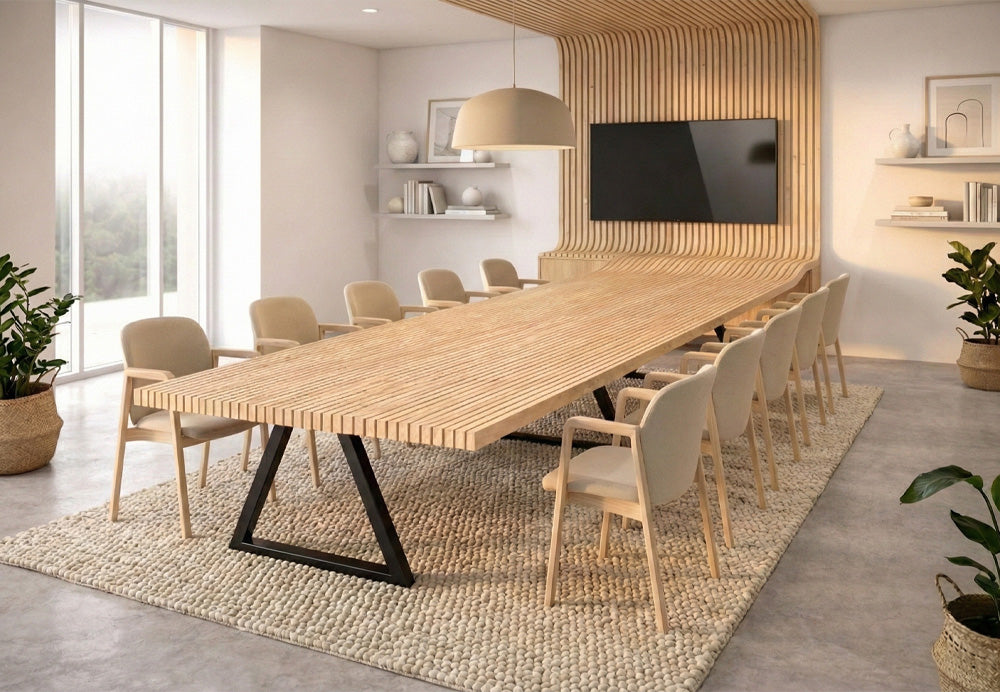
Designed for Real Use
Whether it's a long dining table, a boardroom table, or a conference table, our focus is always on proportion, structure and practicality. Material choices, leg positions and finishes are considered carefully, so the finished table feels calm, balanced and purposeful.
A pedestal base, a meeting table shaped for an awkward room, a table designed for twelve — if it's dining or meeting-room furniture, we can develop it. Edge Grain Ply is particularly well suited to large or long tables, offering strength, stability and a distinctive character.
Have a project you would like to discuss?
A design conversation is often the easiest way to explore a Fully Bespoke project. We can talk through your space, ideas and requirements, and advise on proportions, materials and possible approaches. If you have drawings or ideas, feel free to send them over. If not, a short description of the space and how you plan to use the table is more than enough to begin.
You can book a design conversation, or get in touch by phone or email to discuss a Fully Bespoke project.