Buying a dining table usually starts with the obvious questions: size, seats, shape. Important, yes - but they're rarely what people notice once the table arrives and real life begins.
If you're collecting dining table ideas, these are the quieter details worth thinking through before you fall for one - the ones that decide how a table feels to live with, day in, day out.
You might expect us to answer them for you. We won't. The right answer depends on your room, your chairs and how you live - and we haven't seen your room yet. We're very happy to help you work them out, though. In the meantime, each one comes with something to try.
If size is still the big unknown, start with our guide to dining table sizes.
What does it look like when the chairs are tucked in?
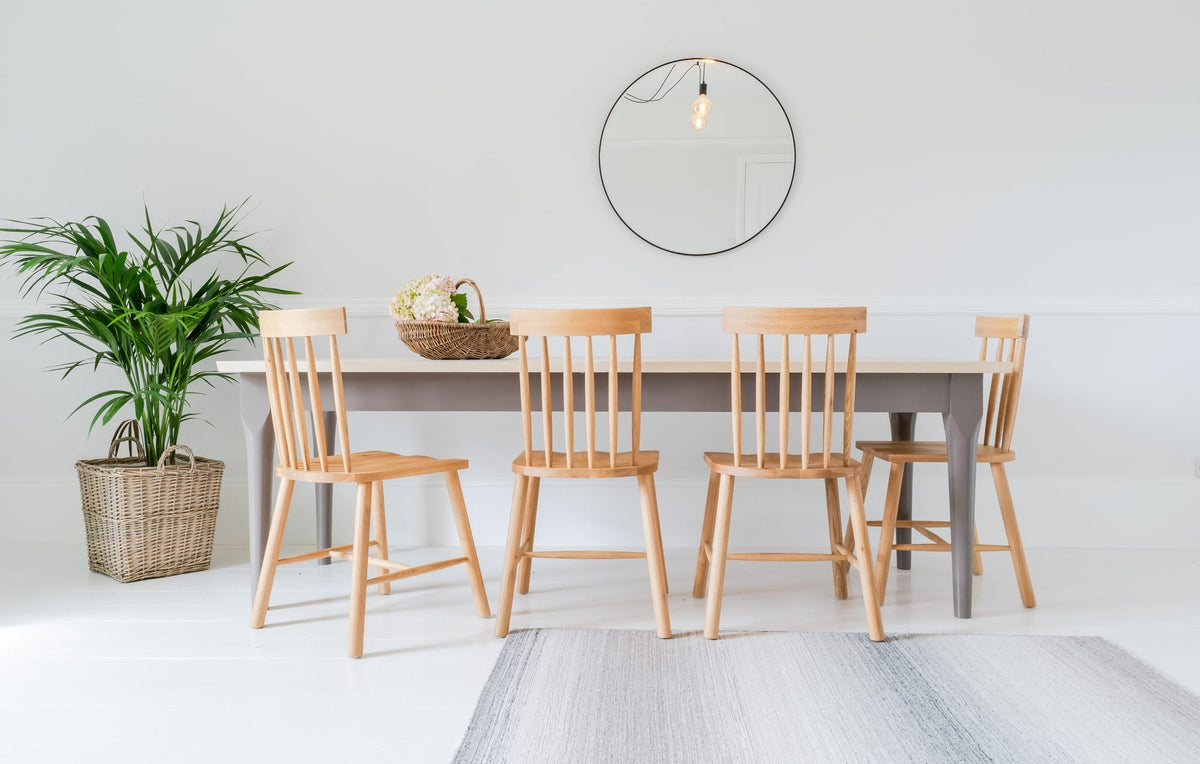
Most of the time, that's how your table is seen. Push your chairs in and step back to the doorway: you're looking at legs, frame and chair backs together, not the top. If they crowd each other, the table will always look busy, however good it is on its own.

Do the legs suit the language of your home?
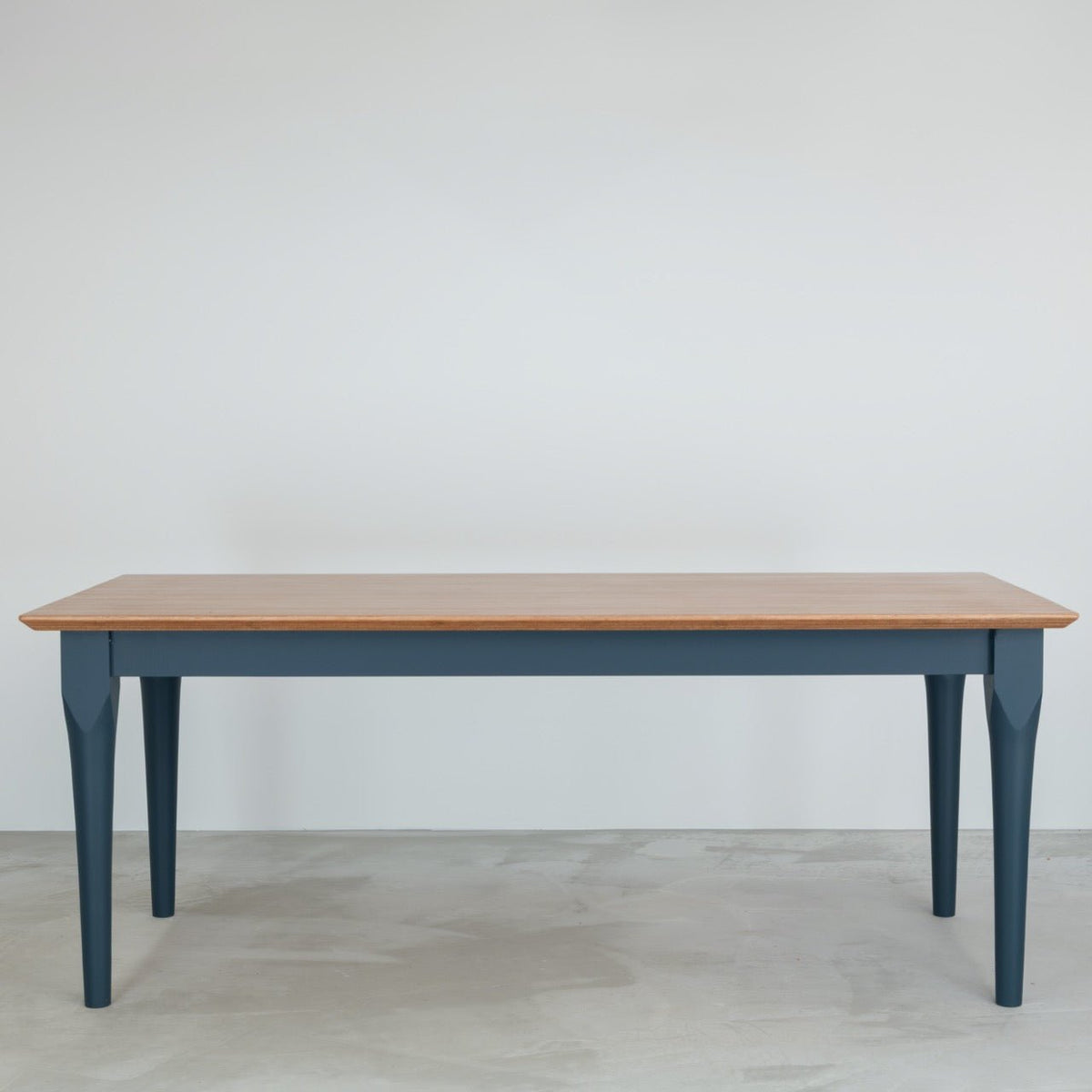
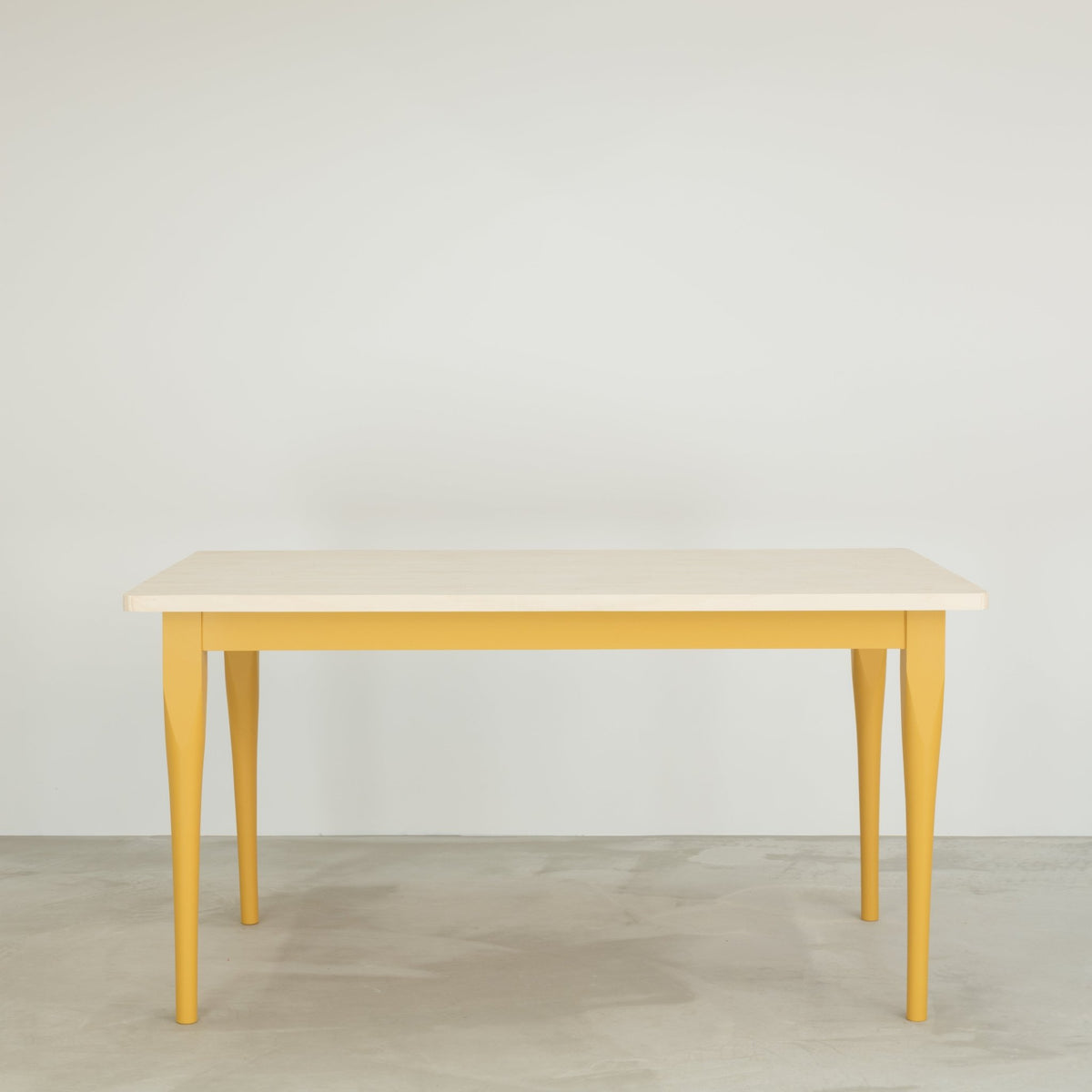
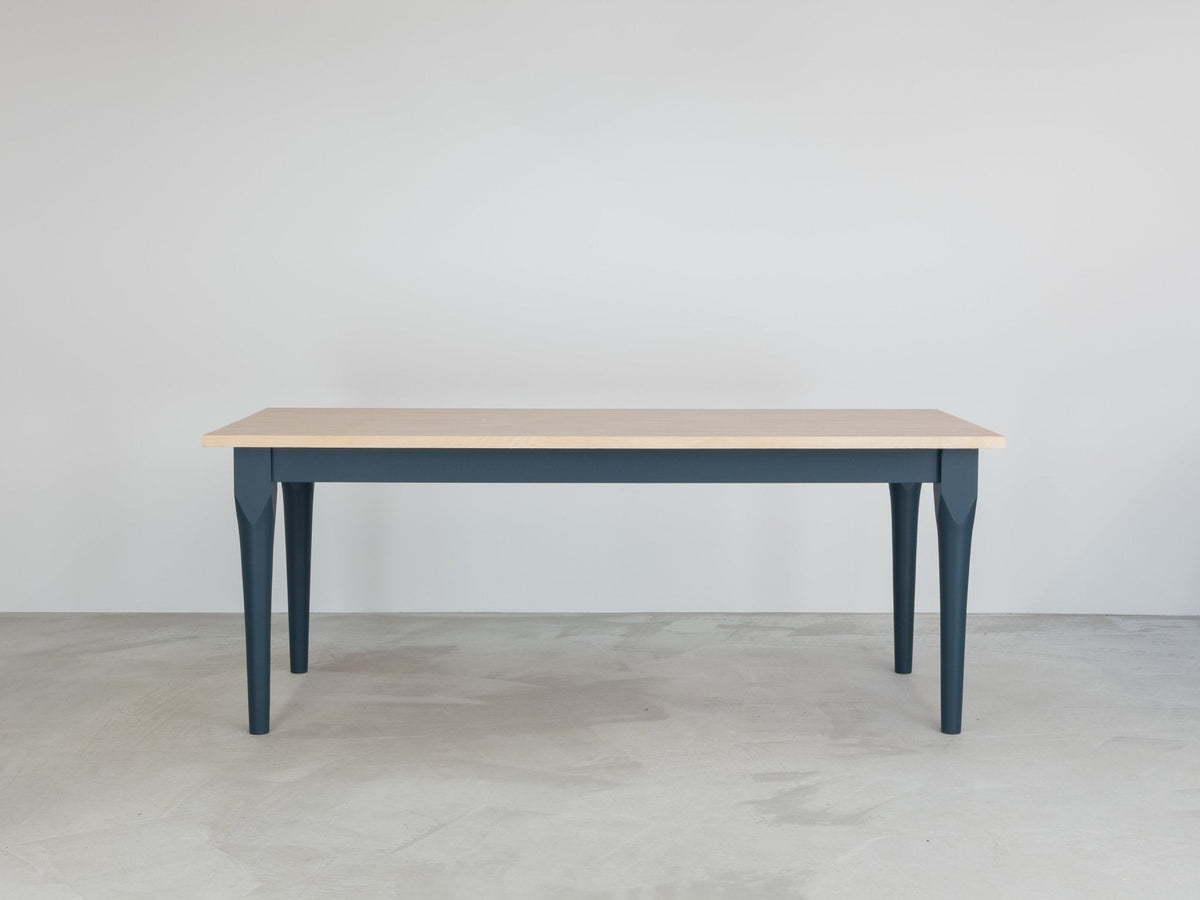
Legs are in a quiet conversation with the rest of the house - skirting boards, stair spindles, door frames, window bars. Look at the woodwork in the room the table is going into. Turned and moulded, or plain and square? Legs that pick up the same line look as if they've always been there. Legs that deliberately don't can be just as good, as long as it's a decision rather than an accident.

Is the colour right for the era of your home?
Colour works best when it feels settled rather than borrowed from this year's magazines. Hold a sample against the floor and the walls in daylight, not just under the kitchen lights at night. Painted legs can be any colour you like - but notice what's already in the room first. Colours & Finishes shows the paints we use and the colours people choose.

Is the overhang right for the style of the table?
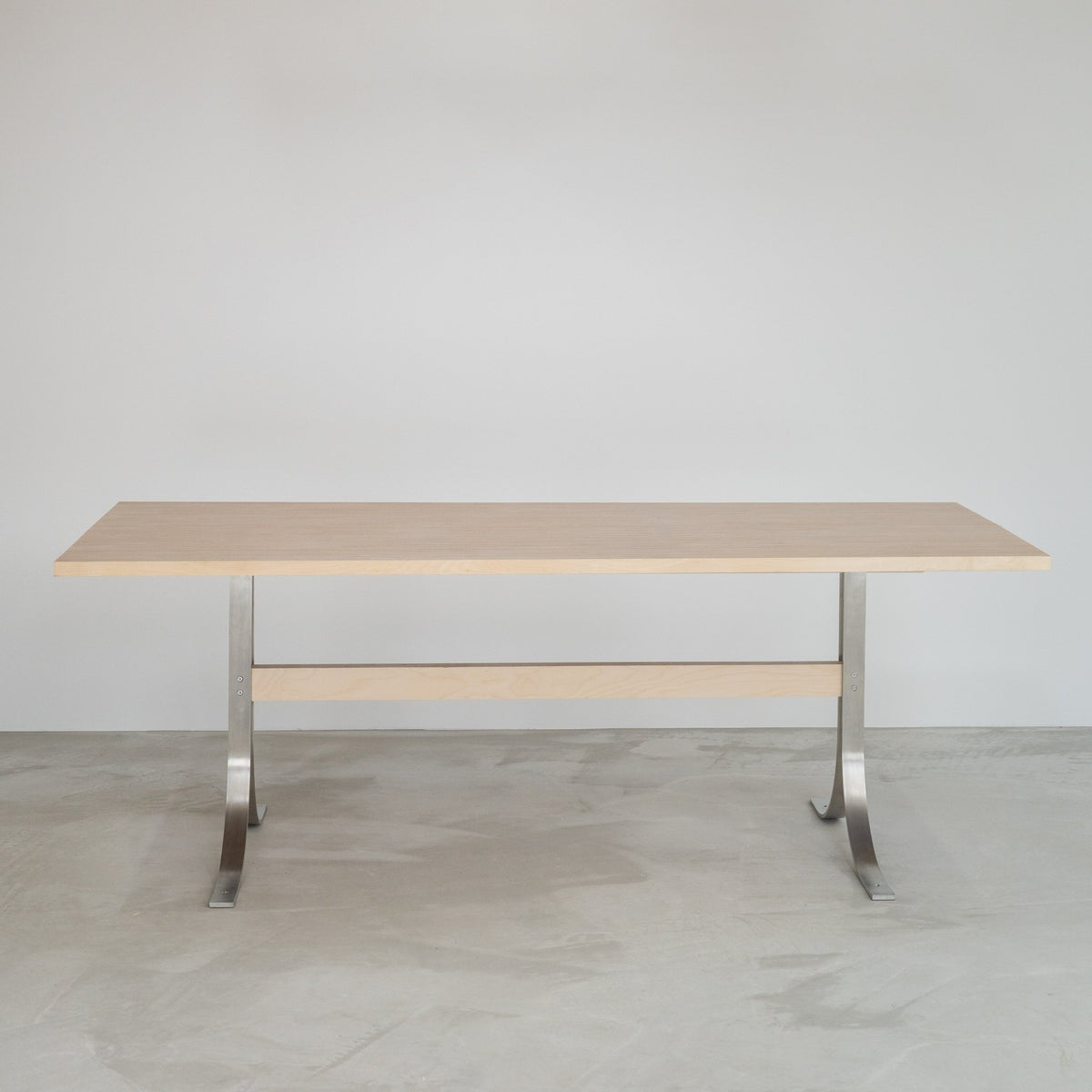
The overhang - how far the top runs past the legs or frame - changes a table's character as much as its comfort. A short overhang looks solid and grounded. A long one makes the top look lighter, almost floating. Sit at a table you already know and notice where your knees meet the leg: that's the measurement that matters.

What does the table do when no one's eating?
A dining table is rarely just for dining. Homework, laptops, jigsaws, the post nobody has opened. Think about the busiest week of the year rather than the quietest, and whether the top needs to cope with it. Birch is the hardest of our four tops if the table is going to work for a living - Table Top Choice compares all four.

Do you want the table to blend in or be noticed?
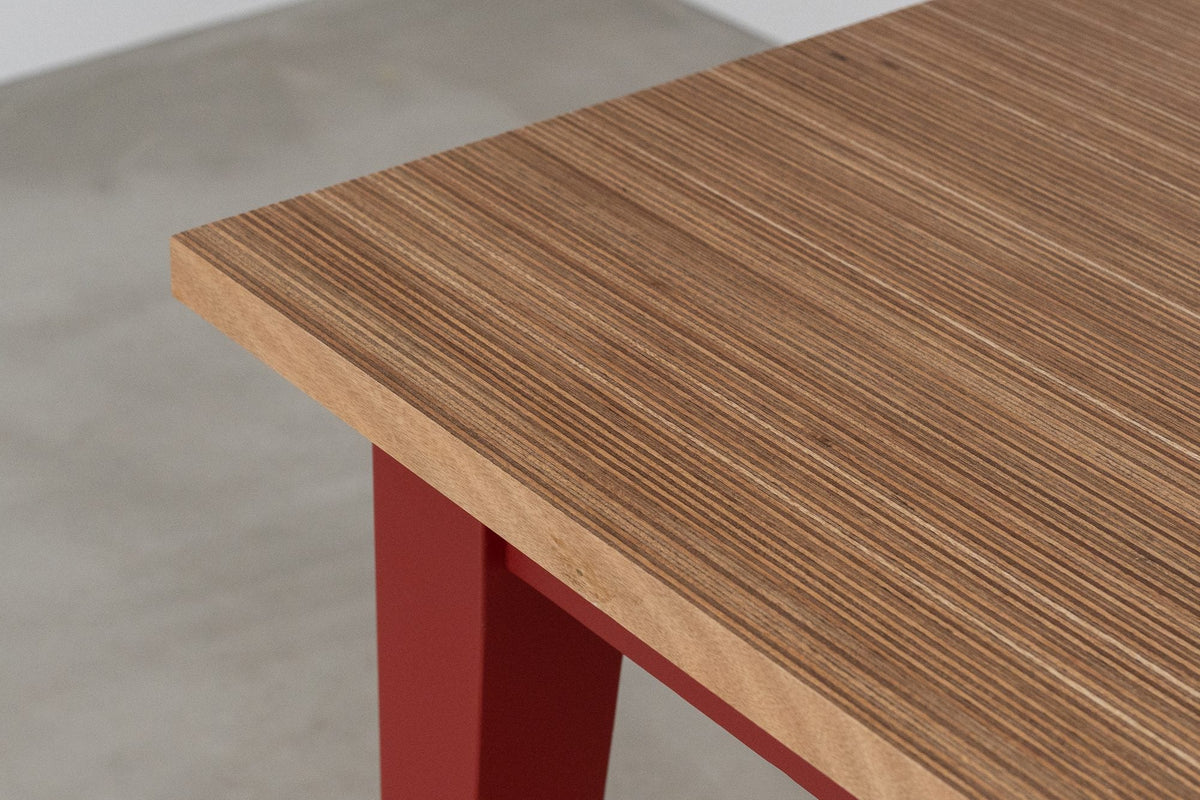
Plenty of dining room table ideas assume the table should be the centrepiece. It doesn't have to be. Some tables anchor a room quietly; others are the thing people ask about. Neither is wrong, but it's worth deciding before you choose the top and the leg colour, because those two do most of the talking. An Edge Grain Ply top is never entirely quiet - every line you can see is a layer of ply - so pair it with calm legs if you'd rather it whispered.

How forgiving do you want it to be?
Some households want a table that shrugs off knocks; others are happy to take a little care. On our tables the finish comes with the wood, so the real choice is the top. Birch is the hardest. Poplar is the softest and marks more easily. Meranti sits between the two and was made for boats, so a steamy kitchen doesn't trouble it. Be honest about who will be using it, and how.

What does the edge feel like?
You touch the edge more than any other part of the table - forearms, hands, the odd hip on the way past. A square edge looks crisp and shows the layers of an Edge Grain Ply top. Meranti Stingray tapers the underside to a thin, rounded lip, which looks lighter and feels softer under the arms. Run your hand along the edge of a table you like and notice what it's doing.

Does it work with real chairs?
Real homes have mismatched dining chairs - inherited pieces, a favourite, the one nobody else is allowed to sit in. If you mix and match dining chairs, on purpose or otherwise, measure the seat height and width of each one, and the gap between the table legs. Our standard height is 75cm to the top of the table, which suits most dining chairs, but arms and wide seats are worth checking before you order.

Will you still like it when trends move on?
Strong proportions outlast fashion. If you're drawn to a look because you've seen it everywhere this year, picture it in ten years. If you'd still choose it then, it's probably yours.

The answers are yours
They depend on your room, your chairs and how you live - which is why they aren't in a list. Working them out together is what the design conversation is for: tell Tim what you have in mind, and the table is designed around it.